

Table of Contents
- Start With a Waste Audit Before You Change Anything
- How to Reduce Single-Use Plastic in Your Daily Routine
- Zero Waste Kitchen Essentials That Actually Get Used
- Sustainable Alternatives to Plastic for Work, Travel, and Events
- Catch the Plastic You Cannot See: Laundry and Microplastics
- How to Spot Greenwashing and Recycle Without Contaminating the Bin
- How to Prevent Plastic Waste Daily Without Burning Out
- Frequently Asked Questions
Last Updated: September 28, 2026
Start With a Waste Audit Before You Change Anything
You cannot fix a habit you have never measured. A waste audit is a one-week count of everything you throw away, and it tells you exactly where your plastic comes from. Most people guess wrong.
- Pick one week. Keep a small bin or bag for plastic only.
- Rinse and count items as you toss them.
- Group them: food packaging, bottles, bags, takeout, bathroom, laundry.
- Note the top three categories. That is your starting point.
How to Reduce Single-Use Plastic in Your Daily Routine
The fastest way to reduce single-use plastic is to replace the four items you touch every single day. Bags, bottles, straws, and cutlery make up a huge share of household plastic waste. Swap those first and you cut the bulk of it.
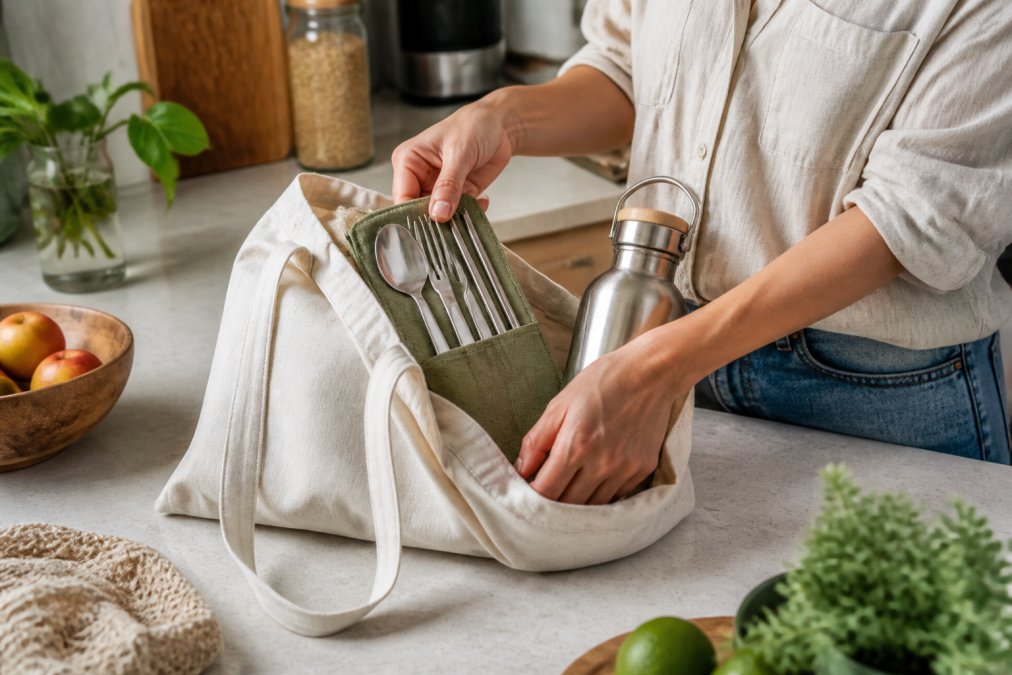
The Big Four: Bags, Bottles, Straws, and Cutlery
Keep a tote bag in your car and one by the door. Fill a stainless steel bottle each morning. Say no to straws, or carry a metal one. Pack real utensils instead of grabbing plastic ones at lunch.
Budget-Friendly Swaps That Cost Less Than $25
You do not need to spend much. A solid reusable cutlery set runs about the price of a few takeout lunches. Our 7 Piece Travel Cutlery Set With Hemp Pouch includes a fork, spoon, knife, straw, cleaning brush, and chopsticks in a hemp and cotton pouch.

Zero Waste Kitchen Essentials That Actually Get Used
Most zero waste kitchen essentials fail for one reason: they are annoying. The gear that sticks is the gear that is easier than the plastic it replaced. Buy for convenience, not for the aesthetic, and buy as little as possible.
Food Storage Without the Plastic Wrap
Glass containers with lids replace plastic wrap and takeout boxes. Beeswax wraps cover bowls and half-cut vegetables. Both go in the fridge and both get reused for years.
The Zero-Cost Version: What You Already Own
The biggest barrier to a lower-plastic kitchen is not motivation. It is the assumption that you have to buy a new set of gear first. You do not. Most kitchens already contain everything you need to cut plastic waste this week without spending anything.
Start here, before you buy a single container:
- Reuse the takeout containers you already have. Rigid plastic tubs from delivery orders are not built for years of service, but they will handle leftovers for months. Use them until they crack, then replace them with glass.
- Repurpose glass jars. Pasta sauce, salsa, and jam jars with their original lids make free storage for dry goods, leftovers, and bulk-bin refills. A quick soak removes the label.
- Turn old cotton t-shirts into rags. Cut them into squares and keep a stack under the sink. They replace paper towels for most spills and can be washed and reused for years.
- Use bowls and plates as covers. A plate on top of a bowl works as a lid for short-term fridge storage. It is not airtight, but it handles overnight just fine.
- Bring your own containers for takeout. Many restaurants will pack your order in a container you bring, especially for phone or online orders where you can ask in advance. It costs nothing and eliminates a styrofoam or plastic clamshell every time.
- Freeze in what you have. Soups, sauces, and stocks freeze well in jars (leave headroom for expansion), muffin tins, and ice cube trays. No plastic freezer bags required.
- Shop the bulk bins with jars you own. Dry beans, rice, oats, and spices usually cost less per ounce from bins than from boxed packaging, so the zero-cost swap can also lower your grocery bill.
Refillable Cleaning Products and Bulk Shopping
Once the free swaps are running, refillable cleaning products cut a surprising amount of plastic. Buy a concentrate, add water at home, and reuse the same bottle. One bottle replaces a shelf full of disposable spray bottles.
Sustainable Alternatives to Plastic for Work, Travel, and Events
Sustainable alternatives to plastic matter most when you are away from home. Work lunches, travel, and events are where disposable items pile up fastest. Plan for those moments and the rest gets easy.
Here is what to pack:
- A reusable cutlery set in your bag or desk drawer
- A stainless steel water bottle
- A cloth napkin instead of paper
- A small container for leftovers
Personal Care and Bathroom Swaps
The bathroom hides more plastic than the kitchen. Swap these when your current ones run out:
- Bar soap instead of bottled body wash
- Shampoo bars instead of plastic bottles
- Bamboo toothbrushes instead of plastic ones
- A safety razor instead of disposable cartridges
- Refillable deodorant instead of single-use sticks
Catch the Plastic You Cannot See: Laundry and Microplastics
Synthetic fibers are the plastic problem most people never see. Every load of laundry sheds tiny plastic strands called microfibers, and they flow straight to waterways. Clothing made from polyester, nylon, and acrylic is the main source.
**ON SALE** 7 Piece Travel Cutlery Set →
You can cut this without buying much:
- Wash synthetic clothes less often
- Use a colder, shorter cycle
- Fill the machine, since friction sheds fibers
- Use a microfiber-catching laundry bag or a filter
- Air dry instead of machine drying
How to Spot Greenwashing and Recycle Without Contaminating the Bin
Greenwashing is when a product looks eco-friendly but is not. The label says "green" or "natural" while the item is still single-use plastic. Learn the tells and you stop wasting money on products that do not help.
Watch for these red flags:
- Vague words like "eco" or "green" with no details
- Plant imagery on a plastic package
- No material listed anywhere on the label
- A chasing-arrows symbol printed on the product itself with no resin code
- Claims like "made with recycled content" that never say how much
Biodegradable vs. Compostable: What the Words Actually Mean
This is where most shoppers get fooled, and it is worth slowing down. "Biodegradable" has no legal definition for most consumer products in this country. In practice, it means the item will eventually break down, but that timeline can run for decades, and it says nothing about what it leaves behind. A conventional plastic bag can technically be called biodegradable.
- Look for a third-party certification logo, not just the word. The most common one for compostability is the BPI Compostable logo, which means the item met a recognized ASTM standard for industrial composting.
- Check whether the label says "home compostable" or just "compostable." Those are different claims, and home compostable is the harder one to earn.
- Scan for a resin code. PLA (polylactic acid), often labeled resin code 7, is plant-based but is not recyclable in most curbside programs and is not accepted by most backyard piles.
- Treat "oxo-degradable" and "photo-degradable" as red flags. These are conventional plastics with additives that fragment faster into microplastics. Several jurisdictions have moved to restrict them because they do not truly biodegrade.
Recycling Without Contaminating the Bin
Recycling has its own trap: contamination. One greasy pizza box or plastic bag in the bin can spoil a whole load at the sorting facility. Follow your local rules, rinse containers, and never bag your recyclables.
A few specifics that trip people up:
- Plastic bags and film are not accepted in most curbside bins, even though they are technically recyclable. They jam the sorting equipment. Many grocery stores collect them separately at the front of the store.
- Black plastic takeout containers often go undetected by the optical sorters used at modern facilities, so they usually end up in landfill even when you put them in the bin.
- Caps can stay on bottles in most programs now, but check your local guidance, since rules vary by hauler.
- "Wishcycling", tossing something in the bin and hoping it gets recycled, does real harm. It raises processing costs and can send otherwise clean material to landfill.
The order matters: refuse first, reuse second, recycle last. Recycling is the backup plan, not the goal. Most plastic never gets recycled at all.
How to Prevent Plastic Waste Daily Without Burning Out
The people who stick with this are not the ones who try hardest. They are the ones who build small systems and let them run. If you want to prevent plastic waste daily for years, aim for habits that survive a busy week.
Try this approach:
- Pick one swap per month, not ten.
- Put the reusable item where you will need it.
- Track your wins in a note on your phone.
- Forgive the misses and keep going.
- Revisit your audit every few months.
Frequently Asked Questions
What are the easiest plastic-free swaps for beginners?
Start with the four items you touch every day: shopping bags, water bottles, straws, and utensils. Keep a reusable tote in your car, a stainless steel bottle on your desk, and a travel cutlery set in your bag. These four swaps alone eliminate hundreds of single-use items per year for most people, and none require a lifestyle overhaul. Add one swap per week rather than changing everything at once, so the habits stick.
How do I reduce single-use plastic when ordering takeout?
Ask restaurants to skip utensils, straws, and condiment packets when you order, and note it in the delivery app's special instructions field. Keep a reusable cutlery set at your desk or in your bag so you never need the disposable version. For office lunches, a stainless steel set with a straw and chopsticks covers almost every meal. Some cities now require restaurants to provide utensils only on request, so requesting none is often already the default option.
Are compostable and biodegradable plastics actually better?
Only when they are processed correctly. Most compostable cups and containers need industrial composting facilities, which many municipal waste systems do not have, so they end up in landfills where they break down as slowly as regular plastic and can release methane. Biodegradable is an even looser term with no fixed timeline or standard. The practical rule: treat compostable items as single-use and reduce them anyway, rather than assuming the label solves the problem.
How can I reduce microplastics in my daily life?
The biggest household source is synthetic clothing. Wash fleece, polyester, and nylon items less often, use a microfiber-catching laundry bag or filter, and run full loads on a gentle cycle to reduce fiber shedding. Switch from plastic cutting boards to wood or bamboo, avoid heating food in plastic containers, and choose loose-leaf tea or paper tea bags over plastic mesh ones. These changes target the sources that shed microplastics directly into water and food.