

Table of Contents
- Why a Reusable Cutlery Set With Case Beats Disposables
- What's Actually in a Good Cutlery Kit
- Stainless Steel Travel Utensils vs. Other Materials
- How to Clean Reusable Cutlery (and Keep It That Way)
- What Makes the Best Travel Utensil Kit for Work and Camping
- Case Features That Decide Whether You Actually Carry It
- Frequently Asked Questions
Last Updated: September 12, 2026
Why a Reusable Cutlery Set With Case Beats Disposables
According to the EPA's municipal solid waste data, food-service items and packaging make up a significant share of what ends up in landfills each year. A reusable cutlery set with case is a small, durable kit of full-sized utensils and accessories stored in a compact carrier, designed to replace single-use plastic forks, knives, and spoons. This guide from Conscious Cutlery breaks down materials, cleaning, case design, and the features that decide whether a kit actually stays in your bag. Below, we'll show you exactly how to pick one that survives daily use instead of gathering dust in a drawer.
The stakes are simple: disposable forks are convenient for about ten minutes and then exist for decades. A stainless steel set you carry once a day replaces hundreds of single-use items a year.
What's Actually in a Good Cutlery Kit
A complete cutlery kit typically includes a fork, knife, spoon, and often a straw and cleaning brush, all held in a fitted case. The difference between a kit you use and one you lose comes down to what's inside and how it's organized.
Utensils, Straw, and Cleaning Brush
Full-sized utensils matter more than most buyers expect. Mini or folding cutlery looks clever in photos but feels awkward with a real meal. Look for:
- A fork with tines long enough to handle salad and rice
- A knife with a serrated edge that cuts through fruit and sandwiches
- A spoon deep enough for soup or yogurt
- A silicone straw for drinks, plus a slim cleaning brush to keep it hygienic
Many kits also include chopsticks or a small set of condiment containers. The cleaning brush is the most underrated piece: without it, a straw becomes a breeding ground for residue.
Stainless Steel Travel Utensils vs. Other Materials
Stainless steel travel utensils outperform most alternatives for daily carry. Food-grade stainless steel resists rust, doesn't hold flavors, and handles dishwasher cycles without warping (peer-reviewed research). Bamboo and wood look warm but absorb oils and can crack if left wet. Silicone is flexible and heat-resistant but can retain odors over time (peer-reviewed research).
| Material | Durability | Dishwasher Safe | Typical Set Weight | Best For |
|---|---|---|---|---|
| Stainless steel (18/8 or 18/10) | High | Yes | 3-6 oz | Daily work lunches, travel |
| Bamboo | Moderate | No | 1-3 oz | Occasional picnics |
| Silicone | Moderate | Yes | 2-4 oz | Kids, soft foods |
| Titanium | Very high | Yes | 1-2 oz | Ultralight camping |
Those weights are for the utensils alone. Add the case and a typical stainless steel kit lands around 5-9 oz total, light enough to forget in a backpack, heavy enough to feel solid in hand. If you're packing for a flight, the whole kit usually fits inside a quart-sized pouch, which matters when you're working against carry-on liquid and space limits.
Why Weight and Dimensions Matter More Than You Think
A few ounces sounds trivial until you're carrying it every day for a year. The practical test is whether the set disappears into your bag. A slim kit under an inch thick slides into a laptop sleeve; a bulky roll-up pouch does not. Measure your bag's internal pocket before you buy, and check the case's closed dimensions against it.
For camping, the trade-off flips. Titanium shaves ounces but costs several times more than stainless steel and can flex under heavy use. Bamboo is lighter still but doesn't survive moisture, so it's a poor fit for a wet backpack. Stainless steel remains the balance point: heavy enough to cut and scoop without bending, light enough to carry daily.
The Safety Question
If you want one set that handles everything, stainless steel is the practical choice. It's also the material most likely to be BPA-free and PFAS-free, which matters if you're avoiding plastic additives. Silicone and bamboo can also be free of those additives, but verify the label, "food-grade" and "BPA-free" are not the same claim, and coatings on some wooden sets are where problems hide.
How to Clean Reusable Cutlery (and Keep It That Way)
Learning how to clean reusable cutlery properly extends its life and keeps it hygienic. Most stainless steel sets are dishwasher safe, but a few habits keep them looking new.
- Rinse immediately after use to prevent dried-on residue
- Use the included brush on straws and tight corners
- Dry fully before closing the case to avoid trapped moisture
- Skip abrasive scouring pads, which dull the finish over time
For hand washing, warm water and mild dish soap are enough. If your set develops water spots, a quick wipe with a soft cloth solves it. Never leave utensils soaking overnight in the case.
What Makes the Best Travel Utensil Kit for Work and Camping
The best travel utensil kit balances weight, size, and durability for how you'll actually use it. For desk lunches, a compact set that fits a lunch bag wins. For camping, you want something that survives a backpack and cleans up without a kitchen.
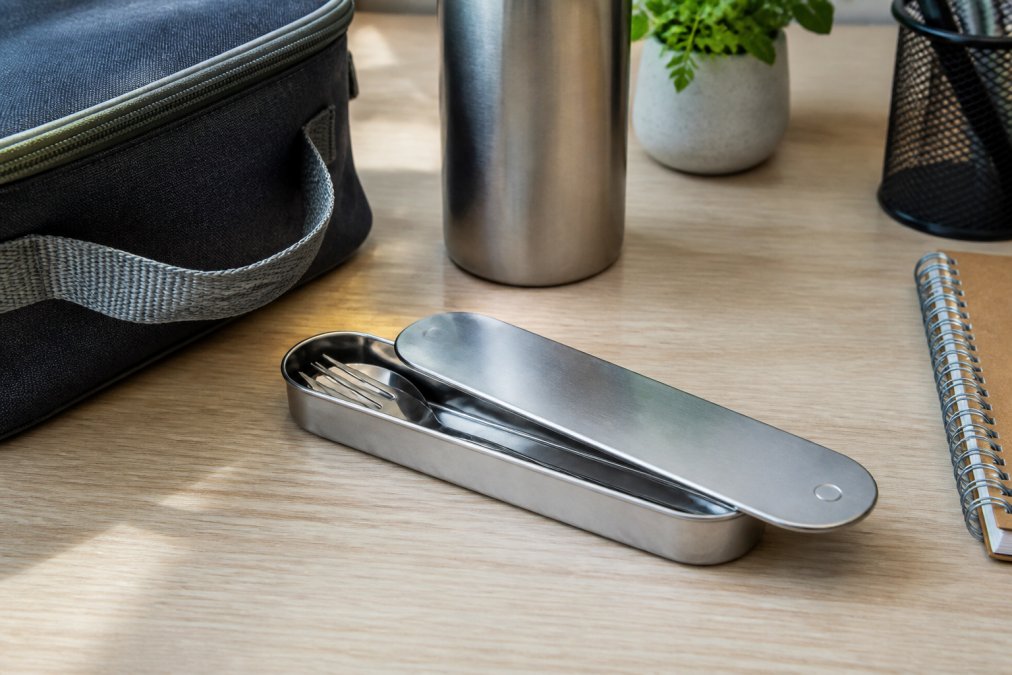
Weight and dimensions decide comfort. A typical stainless steel set runs a few ounces, light enough to forget in a backpack but heavy enough to feel solid in hand. Camping gear takes more abuse, so a snap-lock case and thicker-gauge metal hold up better than a thin pouch.
Ergonomics matter across age groups too. Chunky handles help kids and older users grip comfortably, while slimmer profiles suit adults. If the set is a gift for a mixed group, prioritize handle shape over decorative finish.
Case Features That Decide Whether You Actually Carry It
Case design is the single biggest factor in whether a reusable cutlery set with case earns a permanent spot in your bag. A good case keeps utensils clean, quiet, and accessible.
Look for these features:
- Slider lid or snap-lock closure to keep contents secure
- Wipeable or washable lining, like organic cotton or neoprene
- Slim profile that slides into a laptop bag or glovebox
- Separate slot for the straw so it doesn't rattle
Cleaning the Case (The Part Most Guides Skip)
The case is where hygiene problems actually start. A pouch that never gets washed becomes a humid pocket of food residue, and that's how mold and bacteria build up in the lining.
A workable routine:
- Empty the case completely and shake out crumbs after every use
- Wipe the lining with a damp cloth and mild soap at least weekly
- For fabric pouches, check the care tag, many cotton and linen cases are machine washable on cold, but neoprene usually is not
- Let the case air-dry fully open before you close it
- Rotate in a second case if you use the set daily, so one can dry while the other is in your bag
If you spot dark spots or a musty smell, that's mold. Wash the case in hot water with a small amount of vinegar, dry it in direct sun, and replace it if the spots return. A case that stays damp is worse than no case at all.
When to Repair, Replace, or Retire a Set
Even good kits wear out. Watch for these signals:
- Loose handles or rivets on the utensils, a wobbly fork is a choking hazard for kids and a frustration for adults
- Deep scratches or pitting on stainless steel, which can harbor residue
- A broken zipper or snapped clasp on the case
- A stretched or torn lining that no longer wipes clean
Utensils usually outlast the case. If the metal is still sound, replacing just the pouch is the lower-waste move, many suppliers sell cases separately. When the whole set is done, stainless steel is recyclable through most curbside programs, while silicone and mixed-material cases often are not. Check your local recycling rules before you toss anything, and consider donating a still-usable set to a shelter or school rather than sending it to landfill.
A case that gets cleaned and dried lasts years; one that stays damp gets thrown out in months. The maintenance habit, not the purchase, is what keeps a set in your bag.
Frequently Asked Questions
What is the best portable cutlery set with case?
The best portable cutlery set with case depends on how you'll use it. For work lunches and travel, look for full-sized stainless steel utensils, a compact carrying case with a slider lid or snap-lock closure, and a total weight under 8 ounces. Food-grade, BPA-free materials matter, and a set that includes a silicone straw and cleaning brush gives you more value. Durability and case design usually matter more than brand.
Are stainless steel travel utensils dishwasher safe?
Most stainless steel travel utensils are dishwasher safe, but check the manufacturer's instructions first. The case often is not. Pouch materials like hemp, organic cotton, or neoprene can warp or trap moisture in a dishwasher, so hand wash those. For daily use, rinsing utensils right after a meal and running them through the dishwasher weekly keeps them clean without damage.
How do you clean and maintain a reusable cutlery set?
Rinse utensils immediately after use to prevent food from drying on. Wash with warm water and dish soap, or place stainless steel pieces in the dishwasher if the maker allows it. Dry thoroughly before returning them to the case to avoid mildew in the pouch. Once a month, check hinges on folding cutlery and deep-clean the case with a damp cloth and mild soap.
What should I look for in a travel utensil kit?
Prioritize full-sized utensils over tiny folding versions if you eat real meals on the go. Check the case closure (slider lid and snap-lock hold up better than drawstrings), the material (food-grade stainless steel resists tarnish), and the weight. A set under 8 ounces fits standard lunch bags. If you're buying in bulk for gifts, confirm the case can hold a custom logo cleanly.
Disposable cutlery is convenient for one meal and a burden for decades. Choosing a durable, well-designed set is one of the simplest swaps in a zero-waste routine. Conscious Cutlery offers reusable stainless steel utensils with sustainable hemp, cotton linen, and neoprene cases, plus custom logo printing for corporate gifts and wedding favors. Get started with Conscious Cutlery and carry a set that makes single-use plastic easy to leave behind.