

Table of Contents
- Why a Zero Waste Picnic Set Beats Disposable Gear
- Reusable Picnic Utensils: The Backbone of Any Plastic-Free Kit
- How to Pack a Plastic-Free Lunch and Picnic Basket
- Food Storage That Skips the Plastic Wrap
- Temperature Control Without Plastic: Thermos and Insulated Options
- Cleaning and Sanitizing Your Kit on the Go
- Custom Reusable Utensil Sets for Gifts and Events
- Conclusion: Start Small, Pack Once, Reuse Forever
- Frequently Asked Questions
Last Updated: September 18, 2026
Why a Zero Waste Picnic Set Beats Disposable Gear
A zero waste picnic set is a collection of reusable plates, utensils, napkins, and containers packed once and carried to every outdoor meal instead of thrown away after one use. The math is simple: a single summer of cookouts and park lunches can send a small mountain of plastic forks, foam plates, and cling film to the landfill. Packing reusable gear instead means you buy once and stop restocking.
This guide from Conscious Cutlery covers seven practical zero waste picnic set ideas, from utensils to temperature control, so you can build a kit that actually leaves the house. Below, we'll show you exactly how to pack it, clean it on the go, and even turn it into a gift.
Most guides stop at "bring a reusable bottle." That misses the hard part: making the kit light enough to carry and easy enough to clean that you keep using it.
Reusable Picnic Utensils: The Backbone of Any Plastic-Free Kit
Reusable picnic utensils are the one item you cannot substitute. Everything else in the basket is optional; a fork is not. Stainless steel beats bamboo here for one practical reason: it does not splinter, crack, or grow mold after a damp afternoon in a cooler.
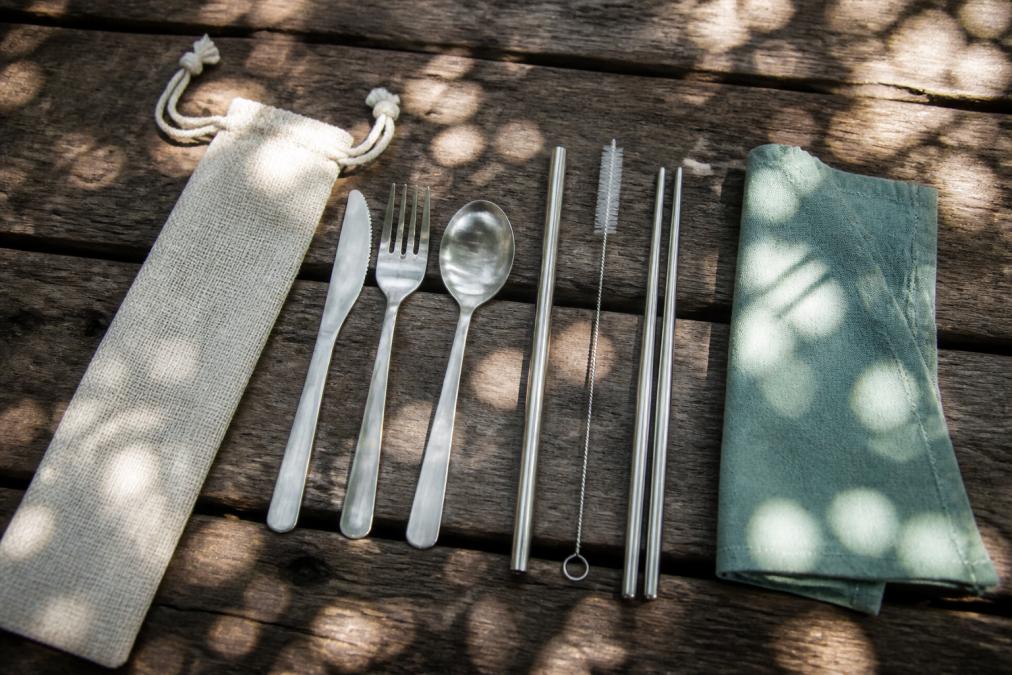
A common mistake is buying a single "family" set and then discovering it lives in the kitchen drawer. The fix is one pouch per person. A seven-piece set with a hemp or cotton pouch, like the 7 Piece Travel Cutlery Set With Hemp Pouch, keeps each person's fork, spoon, knife, straw, straw brush, and chopsticks together and ready to grab.

How to Pack a Plastic-Free Lunch and Picnic Basket
Packing a plastic-free lunch comes down to one rule: pack by weight, not by category. Heavy items go at the bottom against your back, light items on top. That single principle prevents the two failure modes that kill reusable kits, a bag so heavy it stays home, and glass that shifts and cracks before you arrive.
The weight problem is real. Stainless utensils, glass jars, and a vacuum thermos add up fast. A common pattern is to weigh your loaded bag before you commit to a long walk. If it feels heavy at the door, it will feel twice as heavy at the trailhead. The fix is not to leave gear behind but to distribute it: split the kit across two people, or move the thermos to a shoulder strap instead of the main compartment.
Here is a packing order that works for a standard picnic basket or backpack:
- Insulated thermos and heavy glass or stainless containers at the base, against your back
- Cloth napkins wrapped around jars to cushion them, a napkin is free padding you already packed
- Utensil pouches tucked into side pockets, not the main compartment, so they stay upright and dry
- Beeswax wraps and loose produce on top, where they will not be crushed
- A small wet bag for used items on the very top, so nothing drips into clean gear
For glass specifically, the cushioning matters more than the container.
Food Storage That Skips the Plastic Wrap
Food storage is where most zero waste picnic attempts fall apart. Cling film is convenient, and convenience wins on a busy Saturday morning unless you have a faster alternative already in the drawer.
Swap it for these:
**ON SALE** 7 Piece Travel Cutlery Set →
- Beeswax wraps for cheese, cut fruit, and sandwiches
- Mason jars for salads, soups, and overnight oats
- Stainless steel containers for anything that needs to stay rigid
- Cloth napkins instead of paper, which double as potholders and spill rags
Temperature Control Without Plastic: Thermos and Insulated Options
Temperature control without plastic is the angle most zero waste guides skip entirely. A vacuum-insulated stainless thermos holds hot soup or cold drinks for hours, and it does the job a foam cooler cannot. But the mechanism matters: a vacuum layer between two stainless walls blocks heat transfer by conduction and convection, which is why a good thermos keeps contents at temperature far longer than a single-wall bottle wrapped in a towel.
- Frozen water bottles double as ice blocks and drinking water as they melt, no single-use ice bags, no plastic liner
- A wool or felt sleeve around a mason jar slows warming and cushions glass against knocks
- A damp cloth wrapped around a jar and left in shade uses evaporative cooling, the same principle as a clay pot cooler
- Salt-and-ice slurry in a stainless container drops the temperature below freezing and holds it longer than plain ice
- Frozen grapes or berries in a stainless container chill the bag and become dessert
| Item | Best For | Weight | Reusable |
|---|---|---|---|
| Stainless vacuum thermos | Hot soup, cold drinks | Heavier | Yes |
| Mason jar in a wool sleeve | Salads, overnight oats | Medium | Yes |
| Insulated stainless container | Dips, cut fruit | Medium | Yes |
| Cloth-wrapped glass bowl | Serving at the table | Heaviest | Yes |
Cleaning and Sanitizing Your Kit on the Go
Cleaning on the go is the step that decides whether your kit survives the season. A dirty fork at the bottom of a bag is how reusable sets get abandoned.
A simple field routine:
- Wipe utensils with a cloth napkin immediately after eating
- Rinse with drinking water from your thermos if needed
- Air-dry before zipping the pouch closed
- Do a full wash at home that evening
Custom Reusable Utensil Sets for Gifts and Events
Custom reusable utensil sets turn a practical item into a gift people actually keep. Corporate teams, wedding couples, and fundraising organizers all land on the same problem: most promotional swag gets tossed within a week.
Where these sets earn their place:
- Corporate gifts: new-hire welcome kits and employee appreciation
- Wedding favors: one set per guest, personalized with names or a date
- Fundraisers: branded sets sold or raffled to supporters
- Campus bookshops: sets given to incoming students
Conclusion: Start Small, Pack Once, Reuse Forever
The hardest part of a zero waste picnic is not buying the gear. It is building the habit of packing it before you leave the house. Start with one pouch per person, one thermos, and a stack of cloth napkins, and the rest of the kit grows on its own.
Frequently Asked Questions
What are the best materials for a reusable picnic set?
Stainless steel is the most durable choice for utensils because it resists rust, does not absorb odors, and holds up to repeated washing. Look for 18/8 food-grade stainless steel, which is what Conscious Cutlery uses in its travel sets. For storage, hemp, cotton linen, and limestone neoprene pouches are lightweight and long-lasting. Bamboo is compostable but can splinter or develop mold over time. Glass containers work well for food storage, while beeswax wraps replace plastic wrap for covering bowls and wrapping sandwiches.
How do you pack a zero waste picnic without plastic?
Start with reusable containers like stainless steel tiffins, mason jars, or glass bowls with lids. Wrap sandwiches in beeswax wraps instead of plastic film. Bring cloth napkins rather than paper, and pack stainless steel utensils in a fabric pouch. Use a thermos for hot or cold drinks and skip single-use cups. For cleanup, carry a small cloth rag and a refillable water bottle. The goal is to leave nothing behind but crumbs. A reusable picnic utensils set makes the switch simple because everything stays together in one pouch.
Are stainless steel utensils better for the environment than bamboo?
Stainless steel has a higher upfront carbon footprint because of mining and manufacturing, but it lasts for years without degrading. Bamboo is compostable and renewable, yet it can crack, splinter, or grow mold with repeated use, meaning you replace it more often. Over time, one stainless steel set replaces dozens of bamboo or plastic sets. Conscious Cutlery's 18/8 stainless steel utensils are dishwasher safe and rust-resistant, so they hold up to daily use at work, school, or camping trips without needing replacement.
How can I keep my picnic kit organized and portable?
Choose a pouch or case that holds every piece in one place so nothing gets lost. Conscious Cutlery sets come with hemp cotton, cotton linen, or limestone neoprene pouches that fit in a purse, backpack, or glove compartment. Keep the pouch packed between outings so it is ready to grab. If you carry food separately, use stackable stainless steel containers or mason jars that nest together. A carabiner clip on felted wool pouches lets you attach the kit to a bag strap for hands-free carrying.
What is the minimum order for custom reusable utensil sets?
Conscious Cutlery requires a minimum order of 100 pieces for custom printed pouches. This works well for corporate gifts, wedding favors, fundraising items, and college bookshop orders. The pouches come in designs like bees, mandala, trees, and mountains, and you can add your logo or event branding. Because the utensils are 18/8 stainless steel and dishwasher safe, they hold up to daily use, which makes them a practical gift that recipients actually keep rather than toss.