

Table of Contents
- Why Reusable Utensils Are Worth the Switch
- Environmental Impact: Waste Reduction and Resource Conservation
- Cost Savings Over Time: The Break-Even Point
- Benefits of Reusable Food Serviceware for Everyday Meals
- How to Clean Reusable Utensils (Without the Guesswork)
- Reusable Utensils for Travel: What to Pack
- Disadvantages of Reusable Utensils (and How to Handle Them)
- Conclusion: Small Swaps, Lasting Impact
- Frequently Asked Questions
Last Updated: October 5, 2026
Why Reusable Utensils Are Worth the Switch
The benefits of using reusable utensils start with a simple swap that compounds over years. Every disposable fork you refuse is one less piece of single-use plastic entering a landfill, and the math gets better the longer you carry the same set.
Reusable utensils are durable eating tools, typically made from stainless steel, bamboo, or other long-lasting materials, designed to be washed and used again instead of thrown away after a single meal.
Single-Use Plastic by the Numbers
Most people underestimate how quickly disposable cutlery adds up. A single office worker who grabs a plastic fork with lunch five days a week goes through roughly 260 pieces a year.
That's the hidden cost of convenience. The EPA's guidance on reducing single-use plastics notes that source reduction, avoiding the waste in the first place, is the most effective way to cut plastic pollution.
Environmental Impact: Waste Reduction and Resource Conservation
Reusable utensils cut environmental impact on two fronts: they keep plastic out of landfills and they reduce the steady demand for new disposable production. Every disposable fork has to be manufactured, packaged, shipped, and eventually discarded. A stainless steel set skips that entire cycle after the first purchase.
Cutting Greenhouse Gas Emissions and Carbon Footprint
The carbon footprint story is about repetition. A single reusable utensil set carries the emissions of one manufacturing run, then gets used hundreds or thousands of times. Disposable cutlery, by contrast, generates emissions every single time someone eats.
Resource conservation works the same way. Stainless steel is durable and recyclable, so the material stays in circulation rather than being consumed and discarded.
Cost Savings Over Time: The Break-Even Point
Reusable utensils pay for themselves, but the honest answer to "when?" depends on three variables: how often you eat away from home, what you currently spend on disposables, and how you wash the set. Most break-even claims online skip the third variable, which is why they feel too good to be true. Here is the full picture.
The Three Inputs That Decide Your Break-Even
- Uses per week. A desk worker who eats lunch at the office five days a week racks up roughly 260 utensil uses a year. A commuter who eats out twice a week is closer to 100.
- What you replace. If you currently take a disposable fork, spoon, and knife with every takeout order, you are replacing three pieces per meal, not one. If you only occasionally grab a fork, the savings are smaller.
- Washing cost. A dishwasher load costs a few cents in electricity, water, and detergent. A hand wash costs a fraction of that. Either way, the per-use washing cost is small, but it is not zero, and pretending otherwise weakens the case.
Break-Even Logic in Plain Numbers
A single reusable set replaces disposables one meal at a time. The math works like this:
| Factor | Disposable Cutlery | Reusable Utensil Set |
|---|---|---|
| Upfront cost | None | One-time purchase |
| Cost per meal | Recurring, every meal | Near zero after purchase |
| Washing cost | None | Small per wash (dishwasher or hand) |
| Break-even | N/A | After repeated daily use |
| Lifespan | Single use | Years with food-grade stainless steel |
| Replacement need | Constant | Rare |
For a heavy user, five lunches a week, three pieces per meal, the set typically pays back within the first few months of daily use. For an occasional user, it takes longer, but the set still outlasts the comparison because it does not wear out on a single-use schedule.
Why Offices and Events See Faster Payback
The savings scale with headcount. A break room that stocks disposable cutlery for 50 people buys thousands of pieces a year. Replacing that recurring line item with a one-time bulk order of reusable sets, our minimum is 100 pieces, turns a permanent expense into a fixed cost. The same logic applies to wedding favors, fundraising items, and college bookshop giveaways: buy once, hand out once, and the recipient carries the savings forward.
Benefits of Reusable Food Serviceware for Everyday Meals
The benefits of reusable food serviceware extend well beyond the environment. Reusable utensils change how you pack and eat meals, and they quietly improve what ends up on your plate. When you bring your own cutlery, you're more likely to pack a real lunch instead of grabbing whatever comes with a takeout order.
Food Freshness and Healthier Ingredient Choices
Packing lunch with your own utensils nudges you toward fresher ingredients. A home-packed meal of fresh vegetables, lean protein, and whole grains replaces the preservatives, added sugars, sodium, and artificial colors common in prepared takeout.
There's a practical freshness angle too. Reusable food containers and utensils let you portion meals you actually want to eat, and food quality stays higher when you control what goes in.
How to Clean Reusable Utensils (Without the Guesswork)
Hygiene is the number one reason people abandon reusable utensils, and most guides wave it away with "just wash them." That is not enough. Different materials need different care, and the way you dry and store a set matters as much as how you wash it. Here is the routine that keeps a set hygienic and ready to use.
7 Piece Travel Cutlery Set With Hemp Pouch BEES →
Match the Method to the Material
- 18/8 food-grade stainless steel. Dishwasher safe and the easiest to keep clean. It does not absorb odors or stains, and it tolerates hot water and detergent without warping.
- Bamboo and wood. Hand wash with warm water and mild soap, then dry immediately. These materials are porous, so soaking or a dishwasher cycle can cause cracking, warping, or bacterial retention in the grain. Re-oil occasionally to keep the surface sealed.
- Durable plastic (polypropylene). Dishwasher safe on the top rack, but check for scratches. Deep scratches can harbor residue, so replace pieces that show them.
The Five-Step Routine
- Rinse immediately after eating to stop food from drying on.
- Wash with warm water and dish soap, or place stainless steel in the dishwasher.
- Use the straw brush to clean inside the reusable straw, this is the step people skip and the one that matters most.
- Dry completely before returning utensils to the pouch.
- Wash the hemp or cotton pouch periodically by hand and air dry.
Food Safety and Storage
The goal is to remove food residue and moisture, because moisture trapped in a closed pouch is what causes odor and microbial growth. A few practical rules:
- Do not store utensils wet. A quick wipe with a clean towel before they go back in the pouch solves most odor problems.
- Keep the pouch dry between uses. If it gets damp, air it out before closing it.
- At the office, a dedicated drawer or desk caddy keeps the set separate from shared surfaces.
- On the go, a resealable pouch or a quick rinse in a restroom sink is enough until you can wash properly at home.
Accessibility and Real-World Convenience
A reusable set only works if it fits your routine. For people with limited grip strength or dexterity, lightweight bamboo or plastic handles are easier to manage than heavy stainless steel. For sensory preferences, smooth stainless steel feels different from matte bamboo, try one piece before committing to a full set. And for anyone who forgets, the simplest fix is a second set: one for the bag, one for the desk, one for the car.
Reusable Utensils for Travel: What to Pack
Reusable utensils for travel come down to three things: compact size, a secure pouch, and the tools you actually use.
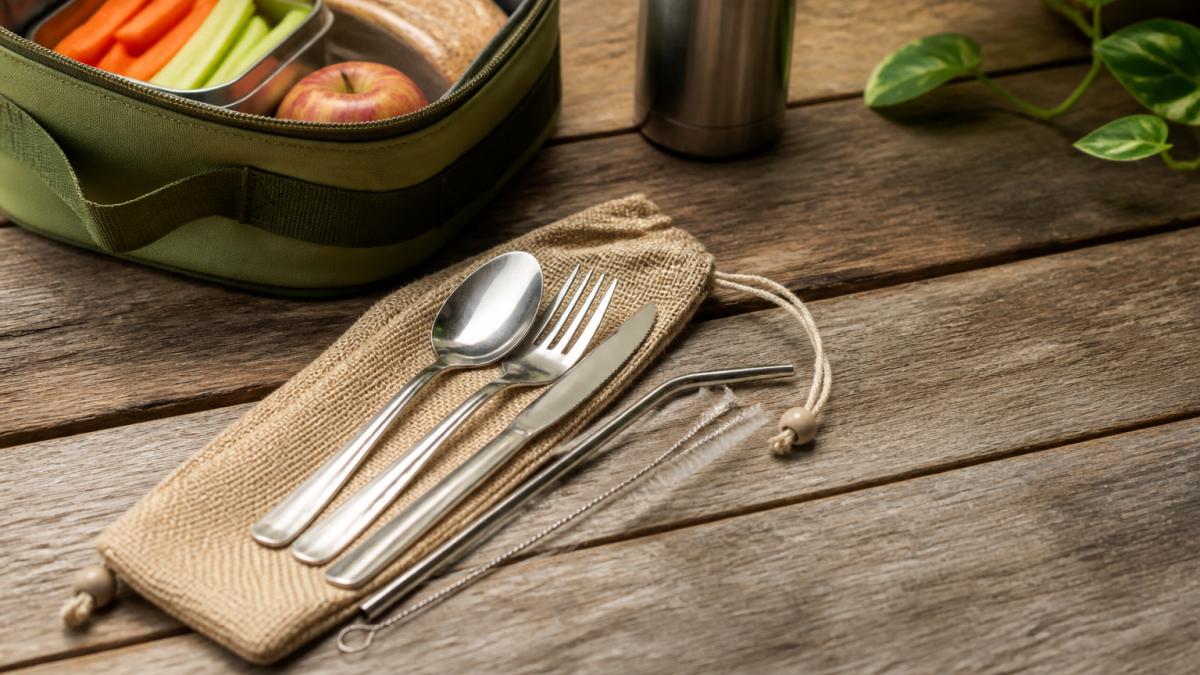
Our 7 Piece Travel Cutlery Set With Hemp Pouch includes a fork, spoon, knife, reusable straw, straw cleaning brush, and chopsticks, all in a lightweight hemp and cotton pouch that fits in a purse, backpack, or glove compartment.

For travel, pack the full set if you eat out often, or just the essentials if space is tight. The pouch keeps everything together so nothing rattles loose in your bag.
Disadvantages of Reusable Utensils (and How to Handle Them)
The disadvantages of reusable utensils are real, but every one of them has a workaround. Knowing them upfront keeps you from abandoning the switch.
- You have to carry them. The fix is a compact set and a dedicated pouch that lives in your bag or desk.
- They need washing. Rinse right after use and run them through the dishwasher at home. It takes seconds.
- They can be forgotten. Keep a second set at the office or in the car so you're never caught without one.
- Upfront cost. It's a one-time purchase that pays back over repeated use, unlike disposables that cost forever.
None of these are dealbreakers. They're habits, and habits settle in fast once the set has a permanent home in your routine.
Conclusion: Small Swaps, Lasting Impact
The benefits of using reusable utensils are practical, not abstract: less plastic waste, lower emissions over time, real cost savings, and better everyday meals. The switch takes one purchase and a little routine, and the payoff grows with every meal you don't throw away.
At Conscious Cutlery, we've built our family-run business around making that switch easy. Our reusable stainless steel sets come with a hemp and cotton pouch, and a minimum order of 100 pieces for bulk orders.
Frequently Asked Questions
What are the benefits of using reusable utensils?
Reusable utensils cut single-use plastic waste, reduce greenhouse gas emissions tied to disposable production, and save money over time. A sturdy set like the 7 Piece Travel Cutlery Set With Hemp Pouch BEES ($24.99) pays for itself after a few dozen takeout meals. They also support food freshness, since you control cleaning and storage, and they work for packed lunches, travel, and everyday office meals.
Are reusable utensils better for the environment than disposable utensils?
Yes, when used repeatedly. Stainless steel utensils avoid the continuous manufacturing, shipping, and disposal cycle of single-use plastics. The environmental gain grows with every reuse, so a set carried daily for a year displaces hundreds of disposable forks, spoons, and knives. Choosing durable 18/8 food-grade stainless steel also means fewer replacements and less waste from broken or warped items.
What are the disadvantages of reusable utensils?
They require washing, take up space in a bag, and can be forgotten at home or left in a desk drawer. Some people find metal utensils heavier than plastic. These drawbacks are manageable: a compact pouch keeps the set organized, a quick rinse after meals prevents residue buildup, and keeping a spare set at work solves the forgetting problem. The trade-offs are minor compared to the waste they prevent.
How should you clean reusable utensils when traveling?
Rinse utensils with warm water and soap after each meal, then dry them thoroughly before returning them to the pouch. If soap is unavailable, use a small bottle of castile soap or disinfecting wipes, then rinse again. Stainless steel utensils from Conscious Cutlery are dishwasher safe, so a full wash at your destination handles any remaining residue. The included straw brush keeps reusable straws clean on the go.
Ready to cut single-use plastic from your daily routine? Get started with Conscious Cutlery and order a reusable utensil set that pays for itself, one meal at a time.