

Table of Contents
- Why Disposable Plastic Is a Problem: The Numbers Behind the Swap
- The Big Comparison: Which Eco Friendly Alternatives Actually Hold Up
- The Benefits of Stainless Steel Utensils Over Bioplastics and Bamboo
- What Biodegradable and Compostable Labels Really Mean
- How to Start a Zero Waste Kitchen Without Overhauling Everything
- Sustainable Corporate Gift Ideas and Wedding Favors That Get Used
- Mistakes That Undo Your Plastic-Free Progress
- Frequently Asked Questions
Last Updated: September 23, 2026
Why Disposable Plastic Is a Problem: The Numbers Behind the Swap
Every year, Americans throw away billions of pieces of single-use plastic cutlery, and most of it never gets recycled. According to the EPA's facts and figures on municipal solid waste, the vast majority of plastic waste ends up in landfills, where it can take centuries to break down. This guide from Conscious Cutlery breaks down the eco friendly alternatives to disposable plastic that actually hold up to daily use.
The Big Comparison: Which Eco Friendly Alternatives Actually Hold Up
The best eco friendly alternatives to disposable plastic are reusable stainless steel, bamboo, and bioplastic options, each trading off cost, lifespan, and disposal differently. Stainless steel wins on durability; bamboo is lighter but wears faster; bioplastics depend entirely on how they're disposed of.
Cost, Lifespan, and Disposal at a Glance
| Option | Upfront Cost | Typical Lifespan | End of Life |
|---|---|---|---|
| Stainless steel | Higher | Years | Recyclable |
| Bamboo | Low | Months | Compostable |
| Bioplastic | Low | Single use | Industrial composting only |
| Reusable silicone | Moderate | Years | Limited recycling |
| Organic cotton wraps | Low | 1-2 years | Compostable |
The takeaway: pay once for steel, or keep paying for replacements.
The Benefits of Stainless Steel Utensils Over Bioplastics and Bamboo
Stainless steel utensils outperform bioplastics and bamboo on lifespan, hygiene, and disposal, which is why they're the most reliable plastic-free swap. They don't splinter, crack, or grow mold the way bamboo can, and they don't require an industrial composting facility to break down.
What Biodegradable and Compostable Labels Really Mean
"Biodegradable" and "compostable" are not the same thing, and neither guarantees a product breaks down in your backyard. Biodegradable means a material will eventually break down, with no timeline or conditions specified. Compostable means it meets a defined standard and breaks down into usable compost, but usually only in an industrial facility.
How to Start a Zero Waste Kitchen Without Overhauling Everything
Starting a zero waste kitchen works best in stages: replace the disposables you use most often first, then build outward. You don't need to empty your cabinets. You need to stop restocking the things you throw away daily.
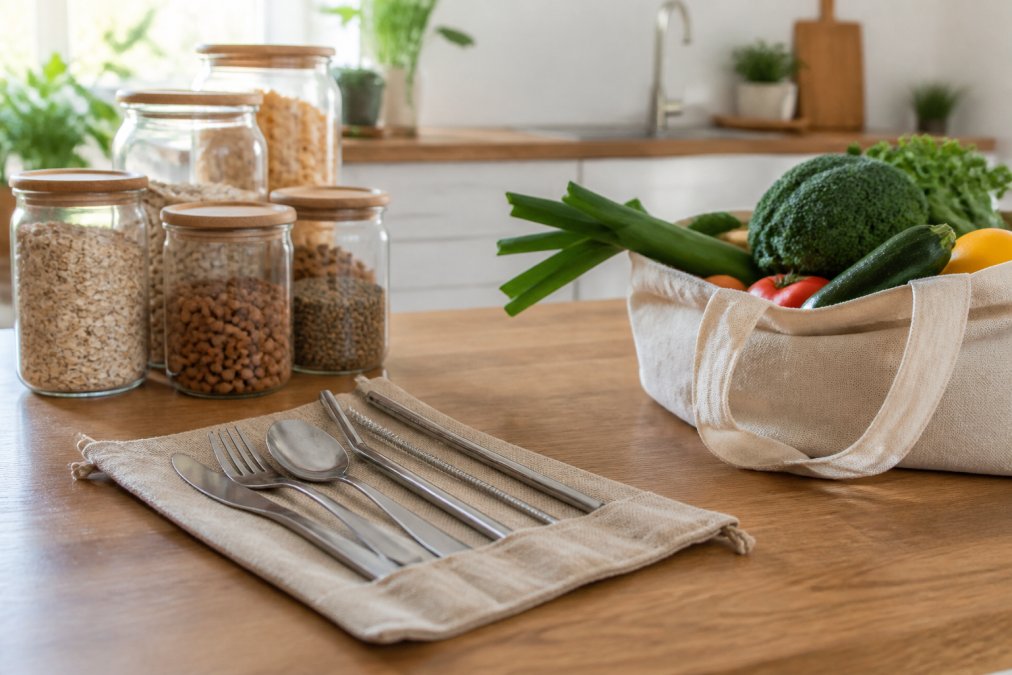
Here's a simple order of operations:
- Swap paper towels for cloth rags
- Replace plastic wrap with beeswax or silicone covers
- Carry a reusable cutlery set instead of grabbing plastic
- Switch to refillable soap and cleaning bottles
- Buy dry goods in bulk with your own cloth bags
- Keep a cloth tote by the door for errands
The Cost Math Most Guides Skip
The "green premium" is real, but it shrinks fast once you divide by uses. A reusable stainless steel cutlery set typically costs more upfront than a box of disposable forks, yet the per-meal cost drops below a penny once you pass a few hundred uses. Disposable cutlery, by contrast, is a recurring line item: buy it weekly for a year and the total often exceeds what a single durable set costs.
What Happens After You're Done Using It
Disposal is where most zero-waste advice gets vague, and it's the part that matters most. "Compostable" on a package usually means the item meets a defined standard and breaks down in an industrial composting facility, not in a home bin, and not in a landfill. Most municipal curbside programs don't accept compostable bioplastics, and many recycling programs reject them too because they contaminate the plastic stream.
The Microplastic Question
A newer concern is whether "eco-friendly" alternatives shed microplastics the way conventional plastics do. Bamboo and other plant-fiber composites are often bound with melamine or other resins, and some studies suggest those binders can release particles over time, especially when heated. Silicone is generally considered stable and inert, but it isn't biodegradable and has limited recycling options. Stainless steel doesn't shed microplastics at all, which is one reason it keeps showing up at the top of lifecycle comparisons.
A Realistic First Month
Week one: move your cutlery set into your bag and stop buying disposable forks. Week two: swap paper towels for a stack of cloth rags. Week three: set up a bulk bin run with cloth bags. Week four: replace one cleaning product with a refillable version. That's four changes in a month, each one permanent, and none of them require a cabinet purge.
Sustainable Corporate Gift Ideas and Wedding Favors That Get Used
The best sustainable corporate gift ideas and wedding favors are useful items people keep, not branded trinkets that get tossed. A reusable cutlery set works because it earns a permanent spot in a bag or desk drawer.

Mistakes That Undo Your Plastic-Free Progress
The biggest mistakes that undo plastic-free progress are replacing disposables with fragile "green" items, forgetting your reusables at home, and trusting labels without checking disposal options. Each one quietly sends you back to plastic.
**ON SALE** 7 Piece Travel Cutlery Set →
Here's what to watch for:
- Buying bamboo or bioplastic that wears out fast, so you rebuy constantly
- Leaving your reusable set at home, then grabbing plastic anyway
- Assuming "biodegradable" means it breaks down anywhere
- Stocking up on eco items you never actually use
- Choosing an alternative without checking whether your area can actually process it
Mistake #1: Ignoring the Lifecycle, Not Just the Label
Most shoppers compare alternatives by what they're made of. A better comparison is lifecycle: how much energy and material goes into making the item, how long it lasts, and what happens when you're done with it. A reusable stainless steel fork has a higher manufacturing footprint than a single plastic fork, but you use it thousands of times, so the per-use footprint collapses.
Mistake #2: Assuming "Compostable" Means Your Backyard
This is the single most common point of confusion. "Compostable" on a product usually refers to a specific standard that requires the sustained high heat of a commercial composting facility. Home compost piles rarely reach those temperatures. Landfills don't either. So a compostable fork thrown in the trash behaves much like a conventional plastic fork, it just carries a better-sounding label.
Mistake #3: Overlooking Microplastic Shedding
A growing concern is whether "eco-friendly" alternatives shed microplastics. Plant-fiber composites like bamboo are often bound with resins that can degrade over time, especially with heat and repeated washing. Silicone is stable but not biodegradable and has limited recycling pathways. Stainless steel doesn't shed microplastics and is widely recyclable, which is why it tends to score well in lifecycle comparisons.
Mistake #4: Buying Green Items You Never Use
A reusable item you leave at home is worse than a disposable you actually use, because you paid the green premium and still bought the disposable. The fix is placement: one set in your bag, one at your desk, one in the car. Redundancy beats willpower.
The Corporate and Event Version of the Same Mistake
For corporate and event buyers, the same logic applies. A branded gift that gets stored beats nothing, but a gift that gets used daily is a walking endorsement. The most common mistake is choosing a trinket over a tool, something cute that ends up in a drawer instead of something practical that earns a permanent spot in a bag or desk drawer.
Frequently Asked Questions
What is the most eco friendly alternative to disposable plastic?
For everyday items you use often, reusable options with long lifespans usually win. Stainless steel utensils, glass containers, and cloth bags replace thousands of single-use items over years of use. A 7-piece travel cutlery set made from 18/8 food-grade stainless steel, for example, can replace disposable forks, spoons, knives, and straws at every work lunch. The best choice is the one you will actually carry and reuse consistently.
Are biodegradable plastics actually better for the environment?
Not always. Many biodegradable plastics only break down in industrial composting facilities, which most households cannot access. In a standard landfill, they can behave much like conventional plastic and release methane as they degrade. Compostable certifications matter more than the word on the label. If your city does not collect compostable packaging, a reusable item like a stainless steel cutlery set delivers a clearer waste reduction benefit than a compostable fork.
How can I start reducing plastic waste in my kitchen?
Begin with the items you replace most often. Swap disposable cutlery and straws for a reusable stainless steel set, move dry goods into glass jars, and keep cloth bags near the door for produce runs. You do not need to replace everything at once. Pick one category per month, and within a few months your kitchen will run on reusables without a single stressful shopping trip.
How do reusable stainless steel utensils help the environment?
Stainless steel utensils are durable, rust-resistant, and dishwasher safe, so one set can last for years and replace hundreds of disposable forks, spoons, and straws. Because they are not fossil fuel-based and do not shed microplastics the way some plastic or composite alternatives can, they cut both waste volume and long-term environmental footprint. Carrying a set in your bag or glove compartment makes the swap automatic.
What should I look for in sustainable corporate gift ideas?
Choose gifts people will use daily, not items that sit in a drawer. Reusable stainless steel cutlery sets with custom logo printing work well because employees take them to lunch, travel, and outdoor events, which keeps your brand visible. Confirm the pouch material (hemp, cotton linen, or neoprene), the minimum order quantity, and whether the packaging is plastic-free before you commit to a bulk order.
Do eco friendly alternatives cost more than disposable plastic?
The upfront price is higher, but the math changes over time. A reusable stainless steel cutlery set costs a one-time amount and replaces disposable utensils for years, while single-use forks and straws get repurchased again and again. For corporate or wedding orders, buying in bulk lowers the per-unit cost. Focus on cost per use rather than sticker price when comparing options.