

Table of Contents
- What a Zero Waste Kitchen Actually Looks Like
- Zero Waste Kitchen Essentials for Beginners
- How to Reduce Food Waste at Home: A Step-by-Step System
- Zero Waste Grocery Shopping Tips That Save Money
- Composting Kitchen Scraps: Organic Waste to Garden Gold
- Eco-Friendly Cleaning Supplies and Zero Waste for Small Spaces
- Conclusion
- Frequently Asked Questions
Last Updated: September 13, 2026
What a Zero Waste Kitchen Actually Looks Like
A zero waste kitchen is a cooking space designed so that almost nothing leaves it as trash: food scraps become compost, containers get refilled instead of replaced, and single-use plastic never makes it through the door.

The goal isn't a perfectly empty bin. It's a kitchen where the trash can fills slowly because you bought less that was destined for it.
The 5 R's: Refuse, Reduce, Reuse, Recycle, Rot
The 5 R's are the decision order for a zero waste kitchen: refuse what you don't need, reduce what you do, reuse what you already own, recycle what's left, and rot the rest into compost. Recycling sits fourth because it's the fallback, not the plan.
Walk through it with one item: a takeout lunch. Refuse the plastic fork. Reduce by packing lunch twice a week. Reuse a steel set you already own. Recycle the paper bag. Rot the apple core.
Zero Waste Kitchen Essentials for Beginners
You don't need a new kitchen, just about six swaps, made over a few grocery runs instead of one expensive haul. Here's what actually earns its counter space.
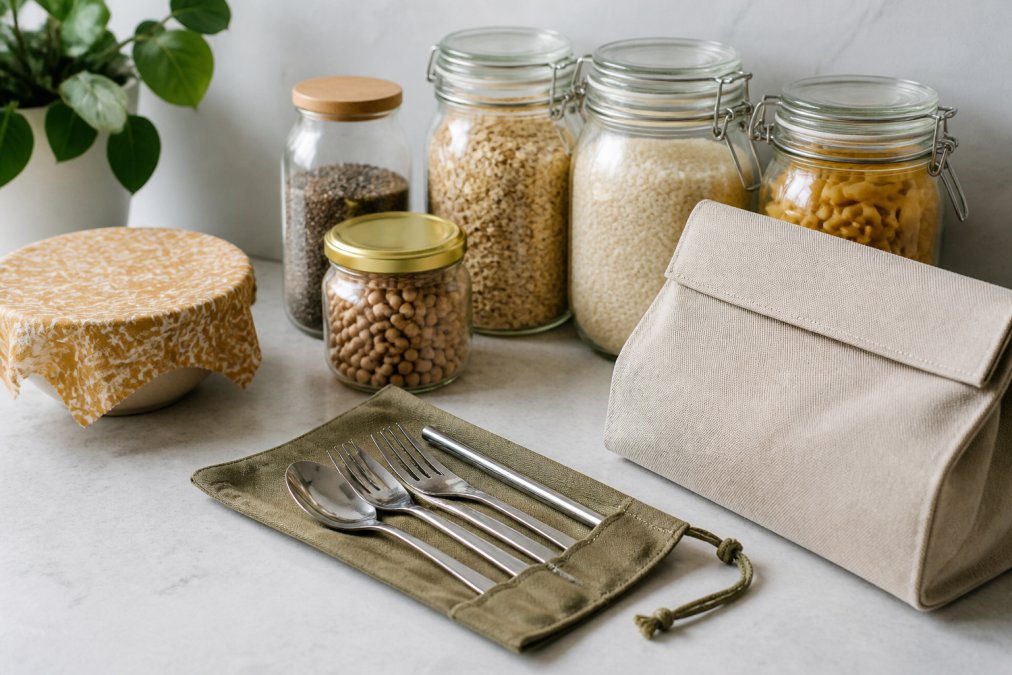
Storage Containers, Glass Jars, and Beeswax Wraps
Glass jars are the backbone. Save every salsa and pasta sauce jar, wash it, and you have free storage for pantry staples and leftovers. Beeswax wraps replace plastic cling film for bowls and sandwiches, lasting about a year before you compost them.
For dry goods, buy in bulk and decant into jars. You'll see exactly what you have, which cuts duplicate purchases.
Reusable Utensils and On-the-Go Kits
The utensil drawer is where most zero waste kitchens quietly fail. You eat lunch at your desk, grab a plastic fork, and undo a week of good habits in one meal.
A travel set solves it. The 7 Piece Travel Cutlery Set With Hemp Pouch BEES packs 18/8 food-grade stainless steel utensils, a straw, and chopsticks into a hemp cotton pouch that fits a standard lunch bag. If you want the message on the outside, the "Plastic Sucks" hemp pouch set says it for you.

How to Reduce Food Waste at Home: A Step-by-Step System
Reducing food waste at home comes down to a weekly rhythm: plan meals, shop from a list built on what you already have, store food so it lasts, and eat leftovers on purpose. Skip the rhythm and even the best intentions rot in the crisper.
Here's the system, in order.
- Inventory first. Before you plan anything, empty the fridge shelf by shelf and note what needs eating this week.
- Plan around those items. Build three or four dinners that use what's already there.
- Write the list, then shop once. A single trip beats three impulse runs.
- Store everything properly the day you get home. Wash, dry, and container it.
- Schedule a leftover night. Put it on the calendar or it won't happen.
- Compost what still slips. Even good systems lose something.
Meal Planning and Inventory Management
Meal planning works when it starts with inventory, not recipes. Most people plan meals they want to cook, shop, then discover they already had half the ingredients going soft. Reverse the order and waste drops fast.
Keep a running list on the fridge door. Cross items off as you use them. It takes ten seconds a day and saves a full grocery run most weeks.
Proper Food Storage Techniques to Extend Shelf Life
Proper food storage is the difference between herbs lasting three days and three weeks. Getting it wrong is why so much produce dies early.
- Leafy greens: wrap in a dry cloth, then bag. Moisture is the enemy.
- Herbs: stand stems in a jar of water, cover loosely, refrigerate.
- Berries: rinse only right before eating. Wet berries mold overnight.
- Onions and potatoes: store separately, cool and dark, never in the same bin.
- Bread: freeze half on day one. It thaws better than it keeps.
Zero Waste Grocery Shopping Tips That Save Money
Zero waste grocery shopping tips usually save money, surprising people who assume eco-friendly means expensive. Bulk bins, a real list, and a set of jars cut both packaging and cost.
Bulk Bins, Grocery Lists, and Pantry Staples
Bulk bins let you buy the exact amount you'll use, so nothing goes stale. Bring your own jars or cloth bags, weigh them first, and fill up on staples you actually cook with: rice, oats, beans, flour, nuts.
A grocery list is the other half. Shoppers who stick to a list buy less and toss less, because every item has a purpose. Build your pantry staples list once and reuse it every week.
| Problem | Fix | What It Saves |
|---|---|---|
| Produce spoils before use | Store by type, rinse late | A week of greens |
| Duplicate pantry buys | Inventory list on the fridge | Repeat purchases |
| Impulse packaging | Bulk bins with own jars | Film and bags |
| Forgotten leftovers | Scheduled leftover night | Full meals |
| Takeout utensils | Travel cutlery set in your bag | Single-use plastic |
Composting Kitchen Scraps: Organic Waste to Garden Gold
Composting kitchen scraps turns what would be trash into free soil for houseplants or a garden bed, no backyard required. Pick a method that matches your space, climate, and realistic effort level.
Pick a Method That Fits Your Space
- Countertop bokashi bin. A sealed, airtight bin that ferments scraps with a bran inoculant. It handles meat, dairy, and cooked food a traditional pile can't, produces a liquid you drain and dilute for plants, and takes up about the footprint of a small trash can. Best for apartments with no outdoor space.
- Electric countertop composter. Runs scraps through heat and aeration and outputs a dry, stabilized material in roughly 4 to 8 hours. It doesn't fully finish compost, but it cuts volume dramatically and kills the smell. Best for small kitchens where you want scraps gone fast.
- Balcony tumbler. A sealed rotating drum that speeds up decomposition and keeps pests out. Works in a few square feet of outdoor space. Best for mild climates and households producing a steady stream of scraps.
- Worm bin (vermicomposting). Red wigglers eat scraps and produce castings. Compact, low-odor when managed well, and good for apartments. Avoid meat, dairy, and citrus in large amounts.
- Municipal food scrap collection. Many cities run curbside or drop-off programs. Check what your local waste authority accepts before buying equipment, some take all food scraps, others only plant-based material.
What Goes In and What Stays Out
Greens (nitrogen): vegetable and fruit peels, coffee grounds and filters, tea leaves, fresh grass clippings, plant trimmings.
Browns (carbon): dry leaves, shredded cardboard and newspaper, paper towels, egg cartons, sawdust from untreated wood.
Keep out of a traditional pile: meat, fish, dairy, oils, and pet waste. These attract pests and smell. A bokashi bin or municipal program can usually take them.
A common ratio is roughly two to three parts browns to one part greens by volume (the EPA). Too many greens and the pile goes slimy; too many browns and it stalls.
Troubleshooting the Two Most Common Problems
Smell. Almost always too wet or too many greens. Add shredded browns, turn the pile, and let excess liquid drain. A sealed bokashi bin should smell like pickles, not rot, if it smells foul, you're not draining the liquid often enough.
Pests. Fruit flies and rodents mean exposed food scraps. Bury scraps in the center of the pile, keep a lid on outdoor bins, and switch to a sealed indoor method if the problem persists.
How Long It Actually Takes
A well-managed outdoor pile breaks down in roughly two to four months in warm weather and slows in winter (usda.gov). Tumblers finish in a few weeks. Bokashi ferments in about two weeks, then gets buried or added to a pile. Electric countertop units finish in hours but produce a pre-compost, not finished soil.
Eco-Friendly Cleaning Supplies and Zero Waste for Small Spaces
Eco-friendly cleaning supplies and small-space living go together better than most people expect. A few concentrates and reusable cloths replace a cabinet full of plastic bottles, which matters most when your cabinet is a single shelf. Most zero waste guides assume a house with a garage and a bulk-buy pantry; apartments need a different playbook.
The Small-Kitchen Playbook
One in, one out. Don't buy the reusable version until the disposable one is finished. This keeps your cabinet from doubling up and spreads the cost over months.
Vertical, not horizontal. Stack jars, hang utensils, and use the inside of cabinet doors. A magnetic strip on the side of the fridge holds knives and frees a drawer. A hanging shoe organizer on a closet door holds cleaning cloths and refill bottles.
Multi-purpose beats specialized. One concentrated all-purpose cleaner, one scrub, and one glass cleaner cover almost everything. Specialized cleaners multiply bottles and take up space you don't have.
Refill, don't rebuy. Find a refill station or a bulk source for the cleaners you use most. If there isn't one nearby, buy the largest concentrate you can and dilute it yourself in a reusable bottle.
What's Actually in the Bottle
Most conventional all-purpose cleaners rely on surfactants to lift grease and dirt, plus solvents, fragrances, and preservatives. Plant-based concentrates do the same job with surfactants derived from plant oils, though some need more dwell time, let them sit on a greasy stovetop for a minute before wiping.
White vinegar is a mild acid that dissolves hard water deposits and cuts light grease. It's not a disinfectant on its own. Castile soap is a plant-oil-based soap that works on most surfaces but can leave a film on glass and shouldn't be mixed with vinegar, the acid breaks the soap down. Baking soda is a mild abrasive for sinks and stovetops.
Sanitation Without the Plastic
Reusable cloths and sponges can harbor bacteria if never cleaned. The fix is simple: rotate them. Keep several cloths in use and wash them on a hot cycle at least weekly. Sponges can go through the dishwasher or be microwaved damp for about a minute. Wooden brushes should dry fully between uses, standing water grows bacteria, not the material itself.
For cutting boards, keep one for raw meat and one for produce, and wash the meat board with hot soapy water right after use. This matters more than what the board is made of.
End of Life for Your Eco Products
Plan the end of life before you buy, so nothing you switched to becomes the next thing in a landfill.
- Beeswax wraps compost once the wax breaks down, usually after about a year of use.
- Silicone bags eventually wear out and are rarely recyclable curbside. Check whether a local specialty recycler takes them.
- Stainless steel utensils and containers can be recycled or handed down. They're the most durable swap on this list.
- Glass jars are endlessly reusable and recyclable.
- Bamboo and wooden tools compost but should be oiled to last longer.
Buying durable and buying less is the whole strategy. A stainless steel utensil set that lasts a decade replaces hundreds of single-use forks, worth putting in a bag, a desk drawer, and a dorm room so it actually gets used.
Conclusion
Starting a zero waste kitchen is less about buying the right products and more about building a rhythm you'll actually keep: inventory, plan, store, compost, repeat. The swaps matter, but the habits carry it.
That's where Conscious Cutlery fits in. Our family-run shop makes reusable stainless steel utensil sets with hemp, cotton linen, and neoprene pouches, and we offer custom logo printing for corporate gifts, wedding favors, and fundraising items. Colleges order them for bookshops and incoming freshman kits, with a minimum order of 100 pieces.
Get started with Conscious Cutlery and put a set in every bag, desk, and dorm room.
Frequently Asked Questions
What are the 5 R's of zero waste?
The 5 R's are Refuse, Reduce, Reuse, Recycle, and Rot. Refuse what you don't need, like single-use plastic bags and disposable utensils. Reduce what you do bring home. Reuse items such as glass jars and storage containers. Recycle what you can't refuse, reduce, or reuse. Rot means composting food scraps and organic waste. Following these in order matters because refusing and reducing prevent waste before it starts, while recycling and rotting handle what's left.
How do I start a zero waste kitchen on a budget?
Start with what you already own. Use glass jars from pasta sauce or salsa instead of buying new storage containers. Swap paper towels for cut-up old cotton t-shirts as rags. Buy secondhand cast iron or stainless steel cookware at thrift stores. When you do buy new, choose durable items that replace disposables long-term, like a reusable stainless steel cutlery set with a hemp pouch. A 7-piece travel set replaces hundreds of plastic forks over its lifetime.
What are the best zero waste alternatives for plastic wrap?
Beeswax wraps work well for covering bowls, wrapping cheese, and packing sandwiches. They mold to the shape of containers with the warmth of your hands and can be washed and reused for about a year. Glass containers with lids handle leftovers and meal prep. Silicone bags replace zip-top plastic bags for snacks and freezer storage. Parchment paper and aluminum foil work in a pinch, though foil is recyclable while most parchment paper is not.
How can I reduce food waste in my kitchen?
Plan meals around what you already have before shopping. Keep a running grocery list and check your fridge inventory first. Store produce properly: leafy greens in damp cloth bags, herbs in water, and root vegetables in cool dark places. Label leftovers with dates and eat them within three to four days. Freeze what you can't finish. Repurpose scraps into stocks, soups, or smoothies. These habits cut food waste at home and lower your grocery bill.
What are some examples of zero waste foods?
Zero waste foods come with little or no packaging. Fresh produce from farmers markets or bulk bins, dried beans and grains from bulk sections, loose-leaf tea, and whole fruits and vegetables all qualify. You can also make staples like bread, broth, and snacks at home to avoid packaging. Buying in bulk with your own cloth bags or glass jars keeps pantry staples like rice, oats, and nuts package-free.
How does a zero waste kitchen handle sanitation and food safety?
Reusable items need regular cleaning. Wash beeswax wraps in cool water with mild soap and air dry. Sanitize glass jars and storage containers with hot soapy water or a vinegar rinse. Stainless steel utensils are dishwasher-safe and don't harbor bacteria when cleaned properly. Compost bins should be emptied every few days and rinsed to prevent odors and pests. Keep raw meat separate from ready-to-eat foods, whether you use reusable or disposable containers.