

Table of Contents
- What You'll Need Before You Plan Anything
- Step 1: Build Your Sustainable Event Planning Checklist
- Step 2: Choose a Sustainable Venue and Cut Energy Consumption
- Step 3: Plan Zero-Waste Catering and Sustainable Food Sourcing
- Step 4: Eliminate Single-Use Plastic With Reusable Cutlery Sets
- Step 5: Vet Vendors With a Sustainability Checklist
- Step 6: Pick Eco Friendly Wedding Favor Ideas Guests Will Keep
- Step 7: Choose Sustainable Corporate Gift Ideas for Team Events
- Measuring What You Saved
- Frequently Asked Questions
Last Updated: September 30, 2026
What You'll Need Before You Plan Anything
Hosting eco friendly events starts with a plan, not a purchase order. Gather a few basics first: a rough guest count, your event date, a budget line for sustainability, and one person who owns the green goals. That last item matters more than most planners admit.
Here's your starting kit:
- A written sustainability goal (one sentence is fine)
- A vendor contact list with questions ready
- A waste plan for the day itself
- A budget note for reusable items
- A way to measure what you saved
Step 1: Build Your Sustainable Event Planning Checklist
A sustainable event planning checklist is a written list of every decision that affects waste, energy, and sourcing, reviewed before you sign any contract. It keeps green choices from becoming afterthoughts.
Build yours in this order:
- Set your zero waste target
- List every item guests will touch
- Mark which items are single-use
- Find a reusable or compostable swap for each
- Confirm what your venue will recycle
- Assign cleanup roles
- Schedule a post-event review
The 7 R's of Sustainability for Event Planning
Most planners know the three R's. Seven works better for events:
- Refuse what you don't need (swag bags, printed programs)
- Reduce quantities across the board
- Reuse signage, linens, and serving ware
- Repair rented items instead of replacing them
- Rot food scraps through composting
- Recycle what's left, correctly sorted
- Rethink the whole format when it helps
That framework alone can reshape a budget.
Step 2: Choose a Sustainable Venue and Cut Energy Consumption
Pick a venue you can reach without a car-heavy commute, then ask about its energy sources. Venues with natural light, strong recycling infrastructure, and walkable transit access cut your environmental impact before you decorate a single table.
Questions worth asking:
- What share of your power comes from renewables?
- Do you have a waste management plan in place?
- Is the site walkable or transit-accessible?
- Do you offer water stations instead of bottled water?
Step 3: Plan Zero-Waste Catering and Sustainable Food Sourcing
Zero waste catering means designing the menu so almost nothing gets thrown away. That starts with headcount accuracy and ends with a compost plan.
Practical moves:
- Confirm final guest numbers 72 hours out
- Choose seasonal sourcing from nearby farms
- Add plant-based options as the default, not the alternative
- Serve buffet-style portions rather than pre-plated
- Arrange compost pickup before the event, not after
Step 4: Eliminate Single-Use Plastic With Reusable Cutlery Sets
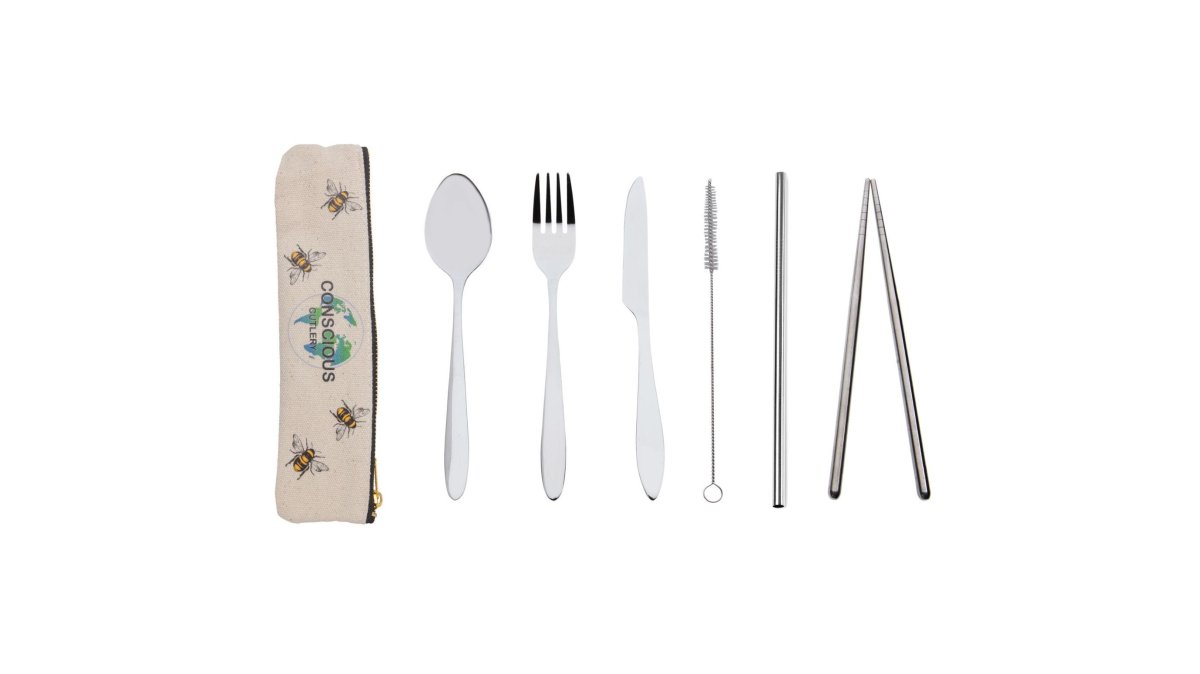
Single-use plastic is the easiest win at any event, and the most visible. Swap disposable forks, spoons, and straws for reusable stainless steel sets and the waste simply never appears.

Step 5: Vet Vendors With a Sustainability Checklist
Vendors make or break your green goals, so vet them before signing anything. A short checklist saves months of regret. Most top-ranking guides tell you to "choose sustainable vendors" and stop there. This section gives you the actual audit tool.
The Vendor Sustainability Scorecard
Score each vendor from 1 to 5 on the criteria below. Anything averaging under 3.5 is a risk to your stated goals. Keep the scores in your event file so you can compare bids side by side instead of relying on a sales pitch.
| Criterion | What a Strong Answer Looks Like | What to Watch For |
|---|---|---|
| Certifications | Third-party verification you can look up | Vague "green" logos with no issuer |
| Material sourcing | Named suppliers and regions | "Eco-friendly materials" with no origin |
| Waste handling | Written plan for their own setup and teardown | "We recycle" with no specifics |
| Post-event metrics | Willing to share diversion or energy figures | Refusal to put numbers in writing |
| Leftover policy | Donation, composting, or reuse plan | Leftovers go to the dumpster |
| Local radius | Within a reasonable drive of your venue | Long-haul freight for bulky items |
What to Ask Every Vendor Before You Sign
- Do you hold any third-party green certification, and who issues it?
- Where do your raw materials come from, and can you name the supplier?
- How do you handle waste generated during your own setup and teardown?
- Will you provide sustainability metrics after the event in writing?
- What happens to unused or leftover items once the event ends?
- Can you deliver within a set radius of the venue to cut freight emissions?
Get answers in writing. Verbal promises about sustainable procurement rarely survive contact with the actual event day.
Contract Language That Protects Your Goals
Add three clauses to every vendor agreement:
- A sustainability representation clause stating the vendor's green claims are accurate.
- A metrics delivery clause requiring a post-event report within a set number of days.
- A substitution clause preventing the vendor from swapping in non-compliant materials without your written approval.
A common mistake is treating vendor claims as facts. Ask for documentation. Reputable suppliers expect the question and answer it quickly. Vendors who resist a written scorecard are telling you something.
**ON SALE** 7 Piece Travel Cutlery Set →
Where Custom Printed Pouches Fit the Vendor Picture
When you source favors and gifts, the same vetting logic applies to the pouch itself. Ask your supplier for the material composition of the pouch, whether the printing process uses low-impact inks, and whether the item is designed to be reused rather than discarded. Custom printed pouches that hold a reusable cutlery set turn a giveaway into a durable tool, which is the outcome your vendor scorecard is trying to protect.
Step 6: Pick Eco Friendly Wedding Favor Ideas Guests Will Keep
The best eco friendly wedding favor ideas are useful, durable, and tied to your values. Anything disposable ends up in a trash can within a week.
Options that hold up:
- Reusable stainless steel cutlery sets in a cloth pouch
- Small potted herbs or seed packets
- Beeswax wraps for leftovers
- Reusable water bottles or travel cups
- Donation cards supporting an environmental cause
Step 7: Choose Sustainable Corporate Gift Ideas for Team Events
Sustainable corporate gift ideas should survive past the conference table. Branded plastic gadgets usually don't.
Strong picks for team events:
- Reusable cutlery sets with your company logo
- Reusable coffee cups or water bottles
- Desk plants in compostable pots
- Recycled notebook and pen sets
- Transit or bike-share credits
Quick comparison of favor and gift options:
| Option | Best For | Keepsake Value | Customizable |
|---|---|---|---|
| Reusable cutlery set | Weddings, corporate events | High | Yes |
| Potted herbs | Small gatherings | Medium | Limited |
| Beeswax wraps | Home-focused guests | Medium | Limited |
| Donation cards | Cause-driven events | Low | Yes |
| Reusable bottles | Sports and outdoor teams | High | Yes |
Measuring What You Saved
Most guides stop at the event. Post-event impact reporting is where the real value lives, and it is the step almost no competitor covers. A one-page summary with your waste diversion figures gives you proof for next year's budget conversation and satisfies corporate social responsibility reporting needs.
The Three Numbers That Matter
Track these from the moment planning starts:
- Waste diverted, weight or volume of material composted, recycled, or donated instead of landfilled.
- Single-use items avoided, count of disposable plates, cups, cutlery, and straws replaced by reusables.
- Reusable vs. disposable spend, what you paid for durable items compared with what disposables would have cost at your headcount.
Where to Get the Data
- Ask your hauler for a diversion report after pickup.
- Request waste figures from your caterer and venue.
- Count reusable items distributed versus returned or kept.
- Pull attendance numbers from registration to normalize per-guest impact.
A Simple Reporting Template
| Metric | Source | Your Figure |
|---|---|---|
| Total waste generated | Hauler or venue | |
| Waste diverted | Hauler | |
| Diversion rate | Calculated | |
| Single-use items avoided | Your count | |
| Reusable items distributed | Vendor invoice | |
| Attendees | Registration | |
| Per-guest waste | Calculated |
Keep the report to one page. Stakeholders read one page. They do not read ten.
Reporting to Different Audiences
- Executives and sponsors want the headline number and the cost comparison.
- Attendees want a short recap showing their participation mattered.
- Your own team wants the lessons learned and what to change next year.
Accessibility Belongs in This Conversation
Green choices should not create barriers. Confirm that reusable items are easy to hold and use, that water stations are reachable for guests with mobility needs, and that plant-based options cover common dietary restrictions. A green event that excludes people is not a sustainable event.
Close the Loop With a Short Survey
Ask attendees two questions: did you keep your favor, and would you attend another green event? The answers tell you whether your reusable items are actually being used, which is the only sustainability claim that holds up over time.
Frequently Asked Questions
How can I reduce single-use plastics at my event?
Start with the items guests touch most: cutlery, cups, straws, and plates. Offer reusable stainless steel utensil sets instead of disposable forks and spoons, set up water stations with real glasses rather than plastic bottles, and skip plastic straws entirely or provide reusable metal ones. Ask your caterer to serve condiments in bulk dispensers, not single-serve packets. A simple pre-event email telling guests you are going plastic-free also cuts waste because people arrive prepared.
What are some examples of eco-friendly party favors?
The best favors are useful items guests actually take home. Reusable stainless steel cutlery sets with hemp cotton pouches work well for weddings and corporate events because they replace daily plastic use. Other options include seed packets, potted succulents, cloth tote bags, and bar soap in paper wrapping. Avoid anything plastic, anything pre-packaged in film, and novelty items that end up in a drawer. Useful beats cute every time.
How do you calculate the carbon footprint of an event?
Add up the main emission sources: attendee travel, venue energy use, food production and transport, and waste disposal. Travel usually dominates, so ask guests to carpool or use public transit. For food, plant-based menus cut emissions sharply compared to beef-heavy ones. For waste, estimate pounds sent to landfill versus recycled or composted. Free online event carbon calculators can handle the math, and you can purchase verified carbon offsets for whatever remains.
What are the best practices for zero-waste catering?
Choose a caterer who cooks with seasonal, locally sourced ingredients and can serve buffet-style rather than pre-plated, which reduces food waste. Ask for compostable or reusable serviceware and confirm the caterer has a plan for leftover food, whether that means donating it or composting it. Track headcount carefully and confirm final numbers 72 hours out. A short waste audit after the event shows you what to adjust next time.
Green events take more planning up front, but the payoff shows in lower waste, stronger guest impressions, and a story worth telling. Conscious Cutlery makes the swap easy with reusable stainless steel utensil sets in hemp and cotton pouches, custom logo printing for corporate and event orders, and a 100-piece minimum that fits most gatherings. Get started with Conscious Cutlery and give your guests a favor they'll actually use.