

Table of Contents
- Quick Comparison: Plastic Free Office Lunch Essentials at a Glance
- Why Reusable Stainless Steel Utensil Sets Beat Disposable Cutlery
- Leak-Proof Containers and Bento Boxes for Desk Lunches
- How to Reduce Plastic Waste at Work: Practical Steps for Busy Professionals
- Sustainable Corporate Gift Ideas That Employees Actually Keep
- Budget-Friendly Swaps and End-of-Life Recycling for Office Lunch Gear
- Conclusion: Building Your Plastic Free Office Lunch Kit
- Frequently Asked Questions
Last Updated: September 25, 2026
Quick Comparison: Plastic Free Office Lunch Essentials at a Glance
Building a plastic free office lunch kit comes down to four core swaps: reusable utensils, a leak-proof container, a cloth or hemp carrier, and a reusable bottle. This guide from Conscious Cutlery walks through each one, plus how to get coworkers on board.
| Essential | Best Material | What to Look For | Skip This |
|---|---|---|---|
| Utensils | 18/8 stainless steel | Dishwasher safe, fits a pouch | Single-use plastic cutlery |
| Container | Glass, silicone, or stainless steel | Leak-proof seal, microwave safe | Thin disposable plastic tubs |
| Utensil pouch | Hemp, cotton linen, or neoprene | Washable, compact | Plastic zip bags |
| Water bottle | Stainless steel or glass | Wide mouth for ice | Single-use plastic bottles |
| Wraps | Beeswax wraps | Reusable, compostable | Plastic cling film |
Why Reusable Stainless Steel Utensil Sets Beat Disposable Cutlery
The biggest mistake with office lunch gear is treating utensils as an afterthought. A reusable stainless steel utensil set is the single highest-use item in your kit, because you touch it every single day.
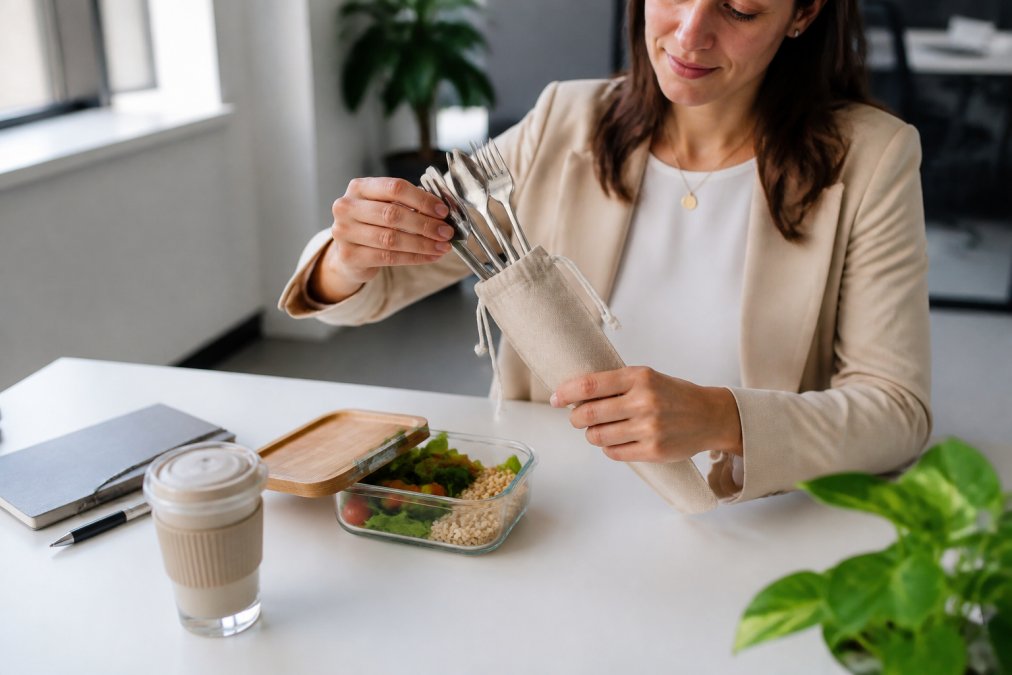
18/8 Stainless Steel vs. Bamboo and Plastic
18/8 stainless steel is a food-grade alloy containing chromium and nickel, which makes it rust-resistant and safe for repeated washing. Bamboo utensils look nice but tend to splinter, crack, and grow mold when they sit damp in a lunch bag.
Pouch Materials: Hemp, Cotton Linen, and Neoprene
The pouch is what keeps your utensils clean between meals and stops them rattling around your bag. Three materials dominate:
- Hemp and cotton blends: Durable, breathable, and naturally resistant to odor. The 7 Piece Travel Cutlery Set With Hemp Pouch comes in PLASTIC SUCKS, Bees, Mandala, and Trees designs.
- Cotton linen: Slightly lighter than hemp, with a zipper closure that keeps everything secure. Options include the Bear, Blue Mountains, and Hummingbird and Cactus designs.
- Limestone neoprene: Water-resistant and flexible, and the pouch itself is dishwasher safe. The Black Mountains, Green Mountains, and Pink Mandala sets use this material.
Leak-Proof Containers and Bento Boxes for Desk Lunches
A leak-proof container is the difference between a lunch you look forward to and a bag you have to rinse out. For desk lunches, a compartmentalized bento box keeps foods separate without plastic wrap or foil, and it lets you pack a full meal in one vessel instead of juggling three plastic tubs.

Glass vs. Silicone vs. Stainless Steel
Each material solves a different problem, and the right pick depends on how you actually eat at work:
- Borosilicate glass: Best for microwave reheating. It doesn't stain, doesn't hold odors, and you can see what's inside. The tradeoff is weight, a full glass bento can add a pound or more to your bag. Look for a lid with a silicone gasket and locking clips rather than a snap-on plastic lid, since the gasket is what actually stops leaks.
- Food-grade silicone: Collapsible options save space in a crowded bag and are the easiest to squash into a packed office fridge. Silicone handles heat well but can pick up strong smells over time, and thin silicone walls don't insulate, so hot food cools fast.
- Stainless steel: The most durable and the lightest of the three, and it won't shatter if you drop it in the parking lot. Most stainless containers aren't microwave safe, so use them for cold lunches or transfer food to a plate first. Stainless also can't go in the microwave at all, which matters if your office only has a microwave and no toaster oven.
Office-Specific Logistics Most Guides Skip
School-lunch guides assume a cafeteria tray and a cubby. An office kitchen is a different environment, and three constraints shape which container you should buy:
- Microwave access is shared and timed. If you reheat at noon alongside a dozen coworkers, a container that heats evenly in 90 seconds beats one that needs stirring and a second pass. Glass wins here because it's microwave-transparent and doesn't create hot spots the way thick silicone can.
- Fridge space is limited. A collapsible silicone container or a slim, stackable glass bento fits where a bulky round tub won't. Measure your office fridge shelf before buying a wide container.
- Professional presentation matters. A stained plastic tub with a cracked lid looks out of place in a meeting-adjacent lunch. Glass and stainless read as intentional; silicone in muted colors does too.
Temperature Control Without Plastic
Keeping food hot or cold without plastic insulation comes down to two layers: the container and the bag. A double-walled stainless container holds heat for soups and stews far longer than a single-wall one, and it keeps cold salads cold without condensation forming on your desk. Pair it with an insulated lunch bag lined in wool felt or recycled cotton rather than a plastic-lined cooler bag.
How to Reduce Plastic Waste at Work: Practical Steps for Busy Professionals
Learning how to reduce plastic waste at work starts with one habit: pack your lunch kit the night before, the same way you'd charge your phone. People who prep in the morning skip it when they're running late.
Here's a five-step routine that takes about ten minutes:
- Fill your water bottle and set it by the door with your bag.
- Pack leftovers into a glass or stainless container while cleaning up dinner.
- Drop your utensil pouch in your bag so it's never left at home.
- Skip the takeout run on days you have a packed lunch, which is where most office plastic waste comes from.
- Rinse everything at the office sink before heading home, so nothing sits dirty overnight.
Sustainable Corporate Gift Ideas That Employees Actually Keep
The best sustainable corporate gift ideas are the ones people use daily, not the ones that end up in a drawer. Custom-printed utensil pouches hit that mark because they live in a bag or desk drawer and get pulled out at lunch.
**ON SALE** 7 Piece Travel Cutlery Set →
Budget-Friendly Swaps and End-of-Life Recycling for Office Lunch Gear
You don't need to replace everything at once, and you don't need to buy new gear at all to start. A budget-friendly transition means swapping one item per month, starting with whatever you throw away most often, and raiding your own kitchen before you shop.
Upcycle Before You Buy
Most kitchens already contain plastic-free lunch gear hiding in plain sight. Before buying anything, check for:
- Glass jars from pasta sauce or salsa, which make excellent leak-resistant containers for soups, overnight oats, and salads. A jar with a metal lid is microwave-safe if you remove the lid first.
- Cotton dish towels that can wrap a sandwich or cover a bowl in place of plastic wrap.
- Metal silverware from a mismatched set in the drawer, no need to buy a travel set if you already own a spare fork and spoon.
- A cloth napkin that replaces paper napkins and doubles as a wrap for utensils.
A Phased Swap Plan
If disposable cutlery is your biggest source of waste, start there. If you buy bottled water daily, start with the bottle. The point is to change the habit you'll actually notice.
- Swap disposable cutlery for a reusable stainless steel set with pouch
- Replace plastic water bottles with a stainless steel or glass bottle
- Move leftovers from plastic tubs into glass or stainless containers
- Trade plastic cling film for beeswax wraps
- Add a cloth napkin to your bag instead of grabbing paper ones
End-of-Life Recycling: What Actually Happens to Your Gear
Most guides stop at "buy reusable." The sustainability case only holds if you know how to dispose of each item when it finally wears out.
- Stainless steel utensils and containers: Among the most recyclable items in a kitchen. Scrap metal recycling accepts them at most facilities, and steel retains its quality through repeated recycling. A bent fork is not trash.
- Glass containers: Recycle indefinitely without losing quality. Check whether your local program accepts colored glass separately.
- Silicone: The tricky one. Most curbside programs don't accept it, so check local rules before tossing a worn-out silicone lid. Some specialty recyclers accept silicone through mail-back programs.
- Hemp and cotton pouches: Can be composted once truly worn out, provided your local program accepts textiles. Cut off zippers and metal snaps first.
- Neoprene pouches: Harder to recycle, which is worth knowing before you buy. If recycling access matters to you, hemp or cotton linen is the better pouch choice.
EPA information on recycling and composting basics
Conclusion: Building Your Plastic Free Office Lunch Kit
The hard part of a plastic free office lunch isn't finding the gear. It's remembering to pack it, wash it, and bring it back the next day.
Frequently Asked Questions
What are the safest materials for a plastic free office lunch kit?
Stainless steel, borosilicate glass, and food-grade silicone are the most common non-toxic, BPA-free choices. Stainless steel is durable and dishwasher safe, glass resists stains and odors, and silicone is flexible for tight bags. Avoid mystery plastics labeled only with a recycling number, since heat and acidic foods can cause leaching. For cutlery specifically, 18/8 food-grade stainless steel resists rust and holds up to daily washing without splintering like bamboo can.
Are reusable stainless steel utensil sets better than bamboo for daily office use?
For five-day-a-week use, stainless steel usually wins. Bamboo can splinter, crack, and develop mold if it stays damp in a lunch bag. Reusable stainless steel utensil sets made from 18/8 food-grade steel are rust-resistant, dishwasher safe, and hold up for years. The trade-off is weight and a slightly higher upfront cost, but a single set replaces hundreds of disposable forks and spoons over its lifetime.
How can I keep my office lunch plastic-free on a budget?
Start with the item you throw away most: disposable cutlery. A reusable stainless steel set with a hemp or cotton pouch costs about as much as a few weeks of takeout forks, and Conscious Cutlery's entry set runs $17.99. Add a glass or stainless container you already own, swap sandwich bags for beeswax wraps, and refill a metal water bottle at the office cooler. Build the kit one piece at a time instead of buying everything at once.
What are good sustainable corporate gift ideas for a large team?
Reusable cutlery sets with custom logo printing work well because employees use them daily rather than storing them in a drawer. Pouch designs like the Bees, Trees, or Mandala styles suit different teams, and bulk orders start at 100 pieces. Pair the set with a note explaining the waste-reduction goal so recipients understand the intent. Sustainable corporate gift ideas land better when the item solves a real daily problem, like desk lunches.
How do I transition to a zero-waste office lunch routine without losing utensils?
Keep the pouch in the same spot as your keys, badge, or laptop bag so it leaves with you every day. Rinse utensils at the office sink before they go back in the pouch, then run them through the dishwasher at home once a week. Label the pouch with your name if you share a kitchen. A compact set that fits a standard lunch bag is easier to remember than loose forks rolling around a drawer.